


Views: 0 Author: Site Editor Publish Time: 2026-05-09 Origin: Site


The public EV charging landscape faces a critical bottleneck today. Operators frequently install inflexible charging hardware across their networks. This rigid infrastructure leads directly to stranded power and underutilized capital. As battery technologies advance rapidly, static chargers struggle to keep pace with varying vehicle demands. Charge Point Operators, retail plazas, and fleet depots now require a smarter, more adaptable approach.
Operators are rapidly shifting toward the EV Modular Full Flexible DC Charger as their new operational standard. These advanced systems dynamically route power exactly where vehicles need it most. We built this complete buying guide to help you navigate this important transition. Our goal is to provide a vendor-neutral, evidence-based roadmap for evaluating and deploying dynamic modular chargers. You will learn how to maximize throughput, protect your infrastructure investments, and avoid overspending on unnecessary grid upgrades.
Dynamic Power Allocation Overcomes 'Stranded Power': Flexible matrix technology automatically routes kilowatts based on a vehicle’s real-time Charge Acceptance Rate (CAR), maximizing station throughput.
Scalability Protects Capital: Modular architectures allow operators to start with lower power outputs (e.g., 120kW) and add power modules later (up to 360kW+) without trenching new concrete.
Uptime is Revenue: Redundant power modules mean a single component failure degrades power slightly rather than causing a total station outage.
Total Cost of Ownership (TCO) Trumps Upfront Cost: True ROI evaluation must include site preparation, utility constraints, and software interoperability (OCPP compliance) to prevent vendor lock-in.
We must first examine the "wood barrel effect" to understand the problem with fixed DC chargers. Traditional fast chargers distribute power using fixed, unchangeable splitting. Imagine you install a 150kW charger featuring two cables. The hardware strictly splits power into a 75kW/75kW configuration the moment two vehicles plug in. If Vehicle A can only accept 50kW due to its battery limits, the remaining 25kW sits permanently stranded. Vehicle B cannot access this unused energy under any circumstances. This rigid architecture limits your site's overall efficiency drastically. It forces drivers to wait longer and artificially caps your daily charging sessions.
Full flexible matrix technology solves this problem through highly intelligent routing logic. Consider a 180kW dynamic charging station serving two connected vehicles simultaneously. Vehicle A arrives at a 10% State of Charge (SoC). It demands maximum power to fill up quickly. Vehicle B arrives at an 85% SoC. It requires far less energy to reach a complete charge. The matrix system automatically shifts independent power modules within the cabinet. It might seamlessly deliver 140kW to Vehicle A while routing 40kW to Vehicle B. As Vehicle A's battery fills, its Charge Acceptance Rate drops naturally. The charger detects this physical change instantly. It then reallocates kilowatts back to Vehicle B without human intervention.
This dynamic sharing mechanism profoundly impacts your bottom line. Higher station throughput means you serve significantly more drivers per hour. You increase your daily vehicle turnover rates automatically. A higher turnover rate translates directly to better ROI per parking bay. You extract maximum financial value from every single kilowatt drawn from the utility grid. You never leave usable energy sitting idle.
When procuring an EV Modular Full Flexible DC Charger, you must evaluate several critical factors. You must look far beyond the initial sticker price to ensure long-term success.
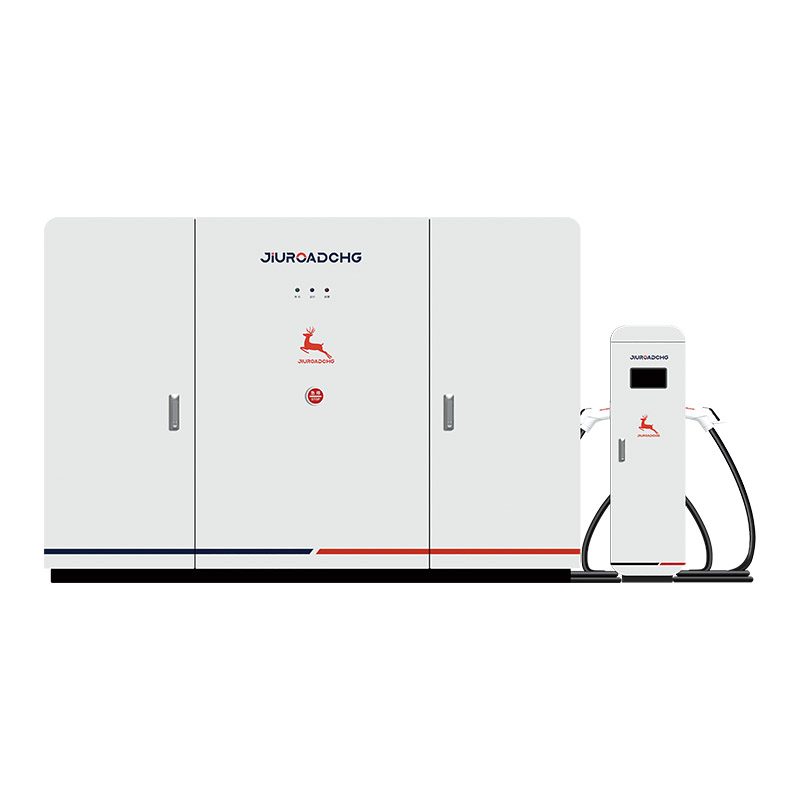
Modern charging cabinets house multiple independent power modules inside their enclosures. These components typically come in 30kW or 40kW increments. This modular approach delivers incredible fault tolerance for site operators. In a traditional centralized charger, one failed internal component often takes down the entire dispenser. Modular systems act very differently. If a single 40kW module fails inside a 240kW cabinet, the dispenser remains fully operational. It simply runs at a reduced capacity of 200kW until a maintenance technician replaces the faulty unit. This built-in redundancy drastically lowers downtime. It protects your revenue streams and keeps drivers happy.
Public chargers face brutal real-world conditions every day. Your chosen equipment must meet strict industrial specifications to survive.
Enclosure Ratings: You should demand NEMA 3R or IP54+ ratings. These ratings protect sensitive electronics against heavy rain, snow, and blowing dust.
Thermal Tolerance: Internal components must withstand extreme temperature swings. They should operate reliably from -30°C to 50°C without derating prematurely.
Cable Management: You need liquid-cooled cables to handle high currents without adding excessive weight. Retractable management systems prevent cable drag across dirty asphalt. They prevent vehicle run-over damage effectively. These systems also keep the physical site ADA compliant by preventing tripping hazards.
Hardware locked to a single software vendor is a massive operational liability. You must demand strict protocol agnosticism from your suppliers. Your hardware should support OCPP 1.6-J natively out of the box. Furthermore, it must offer documented hardware readiness for the newer OCPP 2.0.1 standard. Open protocols ensure you can switch network providers easily if service levels drop. You should also verify ISO 15118 compliance closely. This standard enables modern "Plug and Charge" capabilities. Drivers simply plug in their cars, and the station authenticates them automatically. This feature eliminates messy RFID cards and clumsy mobile apps. It streamlines user payment friction completely.
Many operators experience severe sticker shock during their first major infrastructure project. Civil engineering costs frequently exceed the actual hardware expenses. Trenching through thick concrete, upgrading local transformers, and paying specialized union labor adds up quickly. A single high-power charging bay can require massive upfront capital for site preparation alone. You must balance these installation ratios carefully when planning your network expansion.
A modular approach actively mitigates these initial utility upgrade constraints. Many sites lack the electrical capacity to support 350kW chargers immediately. Instead of abandoning the location or paying for a massive grid upgrade, you can deploy a large-capacity cabinet today. You only populate it with enough power modules to match your current electrical limits. For example, you might install a 360kW-capable cabinet but only load 120kW worth of active modules. When the utility company eventually upgrades the site capacity, you simply slide in additional modules. You scale up your charging power without pouring new concrete or laying new conduit.
Deployment Factor | Fixed Output Charger | Modular Flexible Charger |
|---|---|---|
Initial Grid Limit | Requires immediate utility upgrade for max capacity | Populate modules to match existing grid limits securely |
Future Scaling | Requires replacing the entire dispenser unit completely | Simply add new power modules to the existing cabinet |
Downtime Risk | High (Single point of failure shuts down site) | Low (Redundant active modules keep station running) |
Site design must also account for local permitting codes and accessibility mandates. The Americans with Disabilities Act (ADA) requires specific wheelchair clearances around heavy DC cables. You must design parking bays that allow easy, unhindered reach. Retractable cables help maintain these required clearances by keeping heavy cords safely off the pavement.
Choosing the right hardware partner determines your long-term success. You must evaluate suppliers rigorously before signing any contracts.
First, examine their supply chain and safety certifications closely. Instruct your procurement team to demand official proof of UL 2202 and CE certifications. These documents ensure the equipment meets rigorous global electrical safety standards. If you utilize government grants, you must verify domestic manufacturing requirements. Ask the EV Modular Full Flexible DC Charger manufacturer about their NEVI or Buy America compliance status. Do not assume all manufacturers meet these regional funding criteria.
Next, evaluate their Service Level Agreements (SLAs) and operational support structures. Top-tier manufacturers offer guaranteed response times for critical hardware failures. They must provide robust Over-The-Air (OTA) diagnostic capabilities as a standard feature. Remote diagnostics resolve many common software glitches without rolling an expensive service truck. When physical hardware does fail, hot-swappable module warranties become absolutely crucial. Technicians can swap a faulty power module in minutes while the rest of the station remains live.
Finally, beware of subtle vendor lock-in tactics. Some manufacturers try to force operators into using their proprietary network management software exclusively. You must avoid this trap at all costs. Your hardware must be fully decoupled from backend networks. If a vendor refuses to unlock their hardware for third-party OCPP platforms, walk away. Open ecosystems protect your business independence and your pricing leverage.
A successful public charging strategy requires highly nuanced site planning. Not every parking bay needs a 300kW flexible DC charger. You must match your hardware selections to your typical driver dwell times carefully.
Consider the hybrid blueprint for retail and hospitality locations. These unique environments benefit greatly from a mixed-site ecosystem. We propose installing one dual-port modular flexible DC unit near the primary entrance. This unit serves as an "opportunity charging" hub for high-turnover visitors. They grab a quick coffee, add 100 miles of range, and leave quickly. Alongside this fast charger, install four to six Level 2 AC chargers. These slower, cheaper chargers perfectly serve employees or longer-stay visitors who spend hours dining or shopping. This hybrid approach maximizes your site's overall utility while controlling initial capital expenditures.
Intelligent site management plays a crucial role in this deployment model. You must deploy smart peak shaving strategies to protect your margins. Utility companies impose severe demand charges during peak usage hours. Intelligent energy management systems monitor your site's total load continuously. They can automatically throttle the DC fast charger's output slightly during peak utility rate windows. This temporary reduction avoids punitive demand charges while still delivering adequate power to connected vehicles. You maintain healthy profit margins without compromising the driver experience.
Audit typical visitor dwell times (under 30 minutes vs. over 2 hours).
Allocate fast charging assets strictly to high-turnover bays.
Implement peak shaving software to control maximum site load automatically.
Deploy L2 chargers for long-term parking areas to balance infrastructure costs.
Flexible, modular DC charging stands as an operational necessity for public charging profitability today. It is no longer just a premium feature for luxury locations. Dynamic power allocation solves the stranded power problem completely. It maximizes your daily station throughput automatically. You protect your capital by scaling modular hardware smoothly alongside future grid upgrades.
Your next operational steps are very clear. Conduct a comprehensive site energy audit to understand your true power constraints. Calculate the maximum electrical load your current utility connection can support safely. Then, issue your formal Request for Proposals (RFPs). Explicitly request modular hardware built on open-protocol software architectures. By doing so, you will build a resilient, profitable, and truly future-proof charging network.
A: Load balancing limits total site draw using software restrictions to protect the local grid from overloading. Modular flexible charging physically re-routes independent power modules within the cabinet itself. It pushes available kilowatts to different dispensers based on each vehicle's real-time battery demand.
A: Yes, in leading commercial models. Technicians can easily slide out a faulty power module and replace it without shutting down the entire station. This modular design minimizes routine maintenance costs and prevents total charging site outages.
A: No. The vehicle's onboard Battery Management System (BMS) controls the actual Charge Acceptance Rate securely. The flexible charger only delivers the exact current the vehicle safely requests. It constantly adjusts the output based on internal battery temperature and current State of Charge.


