
Please Choose Your Language


Views: 0 Author: Site Editor Publish Time: 2026-10-19 Origin: Site


Procuring automated parking infrastructure involves exceptionally high stakes for facility developers. You face significant capital expenditures alongside strict spatial constraints. Furthermore, operational downtime remains entirely unacceptable in active commercial facilities. Technical data sheets often present perfect, idealized operating scenarios. However, real-world conditions diverge sharply from these metrics during peak traffic hours. You must look beyond standard promotional brochures to protect your investment. This article provides procurement managers an objective, engineering-focused framework. We evaluate this specific high-density machinery thoroughly before you commit. You will learn how to assess mechanical reliability, analyze peak throughput, and confirm site feasibility.
Evaluating peak-hour throughput is more critical than average retrieval speed; the JR-SRP-20S must align with your facility's specific traffic patterns.
True footprint efficiency requires calculating foundation load limits and necessary civil engineering clearances, not just the physical dimensions of the steel frame.
Total Cost of Ownership (TCO) for smart parking equipment hinges on preventative maintenance schedules, power consumption per cycle, and motor durability.
Verifying fail-safes—such as manual overrides during power outages and photoelectric sensor reliability—is non-negotiable for compliance and liability management.
Before analyzing specific machinery, you must define your structural and operational constraints. Success begins by aligning facility demands against physical site limitations. You cannot force a standard machine into a non-compliant environment. We recommend completing three fundamental steps before vendor discussions begin.
Measure precise vehicle dimensions within your targeted user demographic.
Calculate expected hourly traffic during your absolute peak utilization periods.
Conduct comprehensive soil bearing tests across the proposed installation footprint.
Aligning system capacity requires careful profiling. The machinery designation implies a twenty-vehicle capacity. You must confirm these limits accommodate your specific user base. Standard sedans require different structural supports compared to heavy electric vehicles. Electric vehicles carry dense battery packs. These packs alter the center of gravity significantly. You must check maximum allowable pallet dimensions. Verify dynamic load capacities under continuous movement. Heavy SUVs demand reinforced carrier plates to prevent structural bending.
Throughput requirements dictate daily user satisfaction. Assess acceptable wait times during peak extraction periods. Morning office arrivals stress the machinery heavily. Evening retail departures create similar bottlenecks. Establish your maximum acceptable queue times. Measure these targets against the machine's absolute maximum processing capability. A system processing one vehicle per minute handles sixty vehicles hourly. You must ensure this rate prevents street-level traffic backups.
Geotechnical readiness determines long-term stability. Footprint efficiency extends far below ground level. Factor in soil bearing capacity before shortlisting any vendors. Soft soil requires expensive deep-pile foundations. Evaluate prevailing wind loads for outdoor installations. Strong winds create massive sheer forces against vertical steel structures. Foundation leveling requirements dictate civil engineering timelines. Do not ignore these site-preparation realities during early planning phases.
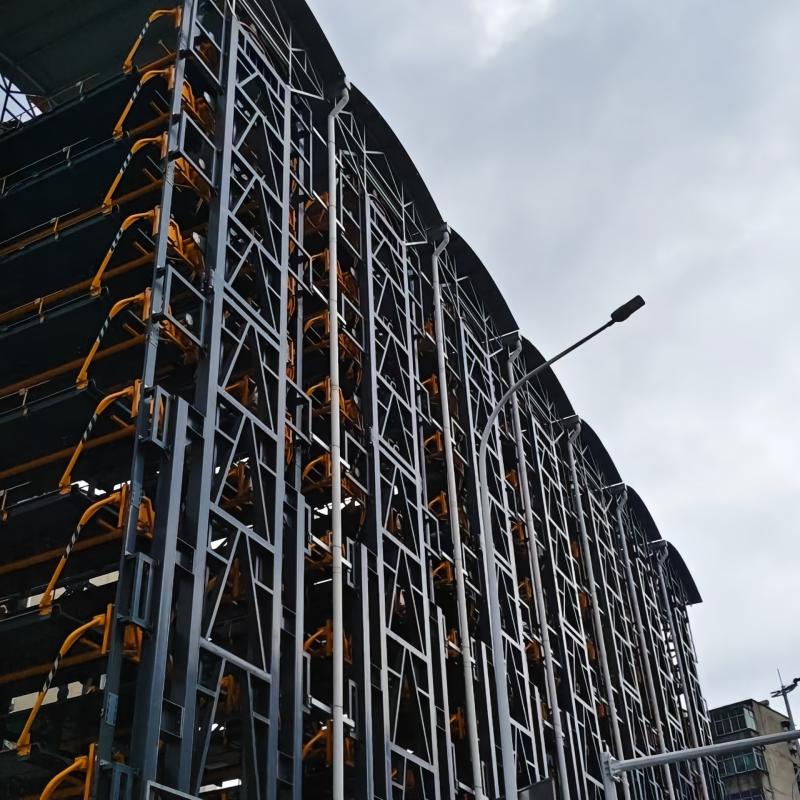
Evaluating true rotary parking system performance demands strict attention to operational data. You must analyze cycle efficiency, energy demands, and environmental impact comprehensively.
Retrieval cycle times define the user experience. Analyze the main drive motor speed closely. Manufacturers usually measure this speed in meters per minute. Always calculate the absolute worst-case scenario. This scenario involves retrieving a vehicle located at the furthest rotational point. Average retrieval times can mislead urban planners. Peak-hour traffic relies entirely on worst-case cycle durations. A slow motor creates exponential delays during shift changes.
Power consumption impacts your monthly budget directly. Evaluate the kilowatt rating of the main drive motor. Starting currents pull massive amounts of electricity. Running currents stabilize shortly after initiation. Calculate energy demands per parking cycle under full-load conditions. This calculation helps forecast operational expenses accurately. High-efficiency motors reduce long-term financial burdens significantly.
Noise and vibration levels require strict management. Assess decibel outputs during continuous operation. This becomes a critical metric for adjacent residential units. Quiet commercial zones strictly regulate noise emissions. Steel wheels moving over steel tracks generate substantial acoustic disruption. Ask manufacturers about specific vibration isolation pads. Acoustic cladding around the exterior frame mitigates noise complaints effectively.
Performance Category | Standard Benchmark | Critical Evaluation Focus |
|---|---|---|
Retrieval Speed | 4 to 6 meters per minute | Worst-case cycle duration during peak hours. |
Power Demand | 11kW to 15kW Drive Motor | Energy cost per cycle under full load. |
Acoustic Output | Below 65 Decibels (dB) | Vibration isolation pad effectiveness. |
Long-term operation relies entirely on raw material quality. Mechanical components endure immense structural stress daily. You must scrutinize engineering standards closely to prevent premature equipment failure.
Structural integrity dictates overall equipment lifespan. Evaluate the steel grade carefully. High-tensile carbon steel resists deformation better than standard alloys. Compare anti-corrosion treatments thoroughly. Hot-dip galvanization outperforms basic spray painting significantly. Zinc coatings protect steel from internal rusting. Assess the expected lifespan against local climate conditions. High humidity accelerates oxidation. Salt air degrades exposed metal rapidly. Extreme cold makes structural steel brittle over time.
Drive system reliability prevents catastrophic operational failures. Differentiate between chain-driven and gear-driven mechanics. Chain systems require regular tensioning adjustments. Gear systems offer higher durability but cost more initially. Assess the rated lifespan of the main drive chain. Carrier pallets operate under continuous heavy loads. They must resist fatigue during constant rotation. Ask vendors about the specific tensile strength of their primary lifting chains.
Lubrication prevents premature mechanical wear. Examine the accessibility of primary grease points. Difficult-to-reach fittings get ignored during routine servicing. Determine whether the equipment features automated centralized lubrication. Automation pumps grease to critical bearings at exact intervals. This feature reduces human error significantly. Proper lubrication extends chain life and reduces unpleasant operating noises.
Modern installations must prioritize user safety and software integration. Selecting reliable smart parking equipment mitigates liability risks. You must protect both vehicles and pedestrians simultaneously.
Active and passive safety features prevent accidents. Evaluate the presence of photoelectric cross-beam sensors. Redundancy matters immensely here. These sensors detect protruding vehicles instantly. They stop the machinery if a human enters the operational zone. Check for robust mechanical anti-swing devices. Suspended pallets must remain stable during rotation. Over-travel limit switches prevent catastrophic mechanical collisions. Emergency stop mechanisms remain mandatory on all control panels.
Software architecture drives daily usability. Assess the Programmable Logic Controller system. Determine if the Human-Machine Interface feels intuitive for everyday operators. Complex interfaces cause unnecessary delays. The operating system should support integration alongside broader building management systems. Ticketless software compatibility adds massive value. License plate recognition cameras streamline the entry process entirely.
Certifications prove regulatory compliance. Verify manufacturing standards rigorously. Look for genuine CE markings. Ensure the factory holds current ISO quality certifications. The machinery must meet local municipal lifting codes. Elevators and automated platforms share strict regulatory frameworks. Non-compliant machinery faces immediate shutdown orders from municipal safety inspectors.
Financial modeling extends far beyond the initial equipment invoice. You must forecast lifetime expenses accurately before finalizing the JR-SRP-20S order.
Capital and operational expenditure breakdowns require transparency. Move beyond the initial freight-on-board pricing. Include heavy crane rental in your installation budget. Specialized rigging teams charge premium daily rates. Civil works add up quickly. Final software commissioning costs often surprise developers. Map every expense from the factory floor to the final safety inspection.
Maintenance assumptions dictate future viability. Review the manufacturer’s recommended service intervals. Weekly visual inspections demand dedicated labor hours. Monthly lubrication checklists require trained technicians. Annual structural audits ensure ongoing safety compliance. Calculate the cost of proprietary spare parts. Verify local availability to avoid extended downtime. Shipping heavy steel components internationally causes massive operational delays.
Emergency contingencies protect your facility during crises. Evaluate manual vehicle retrieval protocols. Total grid failures happen unexpectedly. Ask if the vendor provides a standard auxiliary generator transfer switch. You need a fast mechanical override option. Operators must know how to release the main brake manually. They must lower vehicles safely without electrical power.
Purchasing automated infrastructure requires balancing spatial efficiency against rigorous operational vetting. Successful deployment relies on treating this purchase as an integrated construction project. It is never just a simple plug-and-play appliance.
Define site feasibility before reviewing machinery specifications.
Calculate worst-case retrieval times for accurate throughput planning.
Prioritize heavily galvanized structures for outdoor installations.
Request a detailed geotechnical site assessment immediately.
Demand comprehensive foundation drawings from your vendor as the next step.
You hold the responsibility for long-term operational success. Scrutinize every mechanical detail. Protect your investment through proactive planning and rigorous engineering reviews.
A: The system utilizes heavy-duty carrier pallets designed for specific maximum dynamic loads. Facilities must confirm the per-pallet weight limit accommodates modern EVs. Heavy electric vehicles require strict dynamic load balancing across the rotating structure. The control software distributes these weights evenly to prevent excessive motor strain.
A: Modern installations feature integrated mechanical fail-safes. The system halts immediately using automatic braking mechanisms. Operators can utilize manual release brakes to safely lower and retrieve vehicles. Most commercial setups also require standard backup generator integration to resume automated operations seamlessly during extended grid failures.
A: Equipment quotes rarely cover site preparation. Hidden expenses include deep soil testing and reinforced concrete foundation pouring. Facilities often face unexpected utility relocation costs. Ground leveling and specific geotechnical reinforcements are mandatory before assembling the steel superstructure. Always budget for these essential civil works separately.
A: Drive chain lifespan depends heavily on daily cycle counts and environmental factors. Industry standards suggest replacement every five to seven years under continuous commercial use. Strict adherence to automated lubrication schedules extends this duration. Visual inspections for link stretching should occur during monthly preventative maintenance checks.


