


Views: 0 Author: Site Editor Publish Time: 2026-06-12 Origin: Site


Investing in EV infrastructure requires balancing immediate deployment capabilities against long-term utilization and revenue potential. You must carefully align hardware specifications to meet specific user expectations. Selecting the wrong equipment often leads to stranded assets or insufficient charging speeds. It can also trigger massive, unnecessary electrical utility upgrades. Site hosts frequently struggle to determine the ideal charging speeds for their parking facilities. They face operational bottlenecks when attempting to scale mismatched stations.
This guide provides a direct, technical comparison between AC and DC charging solutions. We help facility managers, fleet operators, and property owners make evidence-based procurement decisions. You will learn how grid capacity constraints dictate hardware choices. We will explore how vehicle dwell times define your overall deployment strategy. You will also discover the operational impacts of deploying a reliable EV charger network for your site.
Conversion Location Dictates Speed: AC chargers rely on the vehicle's limited onboard converter; DC chargers bypass it, delivering power directly to the battery.
Dwell Time is the Deciding Metric: AC is optimal for high-dwell locations (4+ hours); DC is mandatory for rapid turnover (under 1 hour).
Grid Impact vs. ROI: DC Fast Charging requires significant utility upgrades but unlocks higher revenue per minute. AC charging scales easier with existing power constraints.
Future-Proofing: Modern deployments increasingly utilize load-balancing software and a modular EV charger architecture to scale as demand grows.
Understanding charging infrastructure requires examining the underlying electrical conversion process. All electric vehicle batteries store power internally as Direct Current (DC). However, municipal utility grids natively distribute Alternating Current (AC). This fundamental mismatch dictates how fast a vehicle replenishes its battery. The physical location where this conversion occurs creates the primary bottleneck in charging speeds.
When utilizing alternating current, the grid supplies raw power to the station. The station then passes this alternating current directly into the vehicle. The vehicle relies on its internal Onboard Charger (OBC) to convert this energy into direct current. This onboard component acts as a physical funnel. Charging speed is hard-capped by the OBC’s capacity. Most modern electric vehicles feature an OBC rated between 7kW and 22kW. Supplying more power than the OBC can process yields no additional speed benefits.
Direct current hardware operates on a fundamentally different principle. The heavy-duty conversion process happens entirely inside the charging station hardware. Power is delivered straight into the vehicle battery, completely bypassing the internal OBC limitations. This external conversion allows speeds ranging from 50kW up to an astonishing 350kW or higher. By shifting the conversion burden externally, you unlock rapid replenishment times.
The journey of electrical current follows a specific, standardized sequence during any active session:
Grid Transmission: The utility provider delivers baseline alternating current to your main electrical panel.
Routing Phase: The site infrastructure directs this current to the individual station dispensers.
Rectification Phase: Inverters transform alternating current into direct current (occurring either onboard the vehicle or inside the external cabinet).
Energy Storage: The battery cells chemically absorb and store the direct current for future propulsion.
These differing mechanisms heavily influence the hardware form factor. Slower stations remain highly compact. They contain primarily safety relays and communication boards. You can easily wall-mount them or place them on simple pedestals. Conversely, rapid external converters require massive power cabinets. They demand specialized active cooling systems to manage intense heat generation. This footprint difference drastically alters site planning requirements.
Technical Attribute | Alternating Current (AC) | Direct Current (DC) |
|---|---|---|
Conversion Location | Inside the vehicle (OBC) | Inside the station cabinet |
Typical Speed Range | 7kW to 22kW | 50kW to 350kW+ |
Hardware Footprint | Compact, wall-mountable | Large, floor-mounted cabinets |
Thermal Management | Passive air cooling | Active liquid or forced-air cooling |
For most property owners, slower infrastructure represents the cornerstone of their deployment strategy. The primary business objective centers on scalable, widespread deployment. You implement these systems where vehicles remain parked for extended durations. This strategy maximizes the number of available plugs while minimizing utility upgrades.
Dwell time acts as the ultimate deciding factor here. Locations where drivers park for four to ten hours align perfectly with slower replenishment. These use cases naturally match the natural downtime of the vehicle. You provide a valuable amenity without stressing the local grid.
Optimal deployment environments include:
Corporate workplaces and employee parking structures.
Multifamily residential complexes and apartment buildings.
Hotel properties catering to overnight guests.
Long-term airport parking facilities.
When selecting hardware, you must differentiate between commercial and temporary units. A robust Commercial EV charger provides advanced networking capabilities. These Level 2 units utilize the Open Charge Point Protocol (OCPP). This protocol enables vital functions like automated billing, user access control, and remote diagnostics. More importantly, networked hardware supports dynamic load management. You can safely install multiple dispensers on a single electrical circuit. The software automatically throttles power output when multiple vehicles plug in simultaneously.
Conversely, some situations require flexibility over permanence. A Portable EV charger offers significant value for temporary sites. Construction companies, event-based fleets, or emergency backup scenarios benefit greatly from these mobile units. They provide essential Level 1 or Level 2 replenishment without requiring dedicated trenching or permanent pedestals.
The implementation realities for slower stations remain highly favorable. Installation procedures are typically straightforward. The hardware usually operates on standard 208V or 240V electrical circuits. Most commercial buildings already possess sufficient panel capacity to support a modest initial deployment. However, these units generate lower direct revenue per hour. You must balance the easier installation against a slower financial return rate.
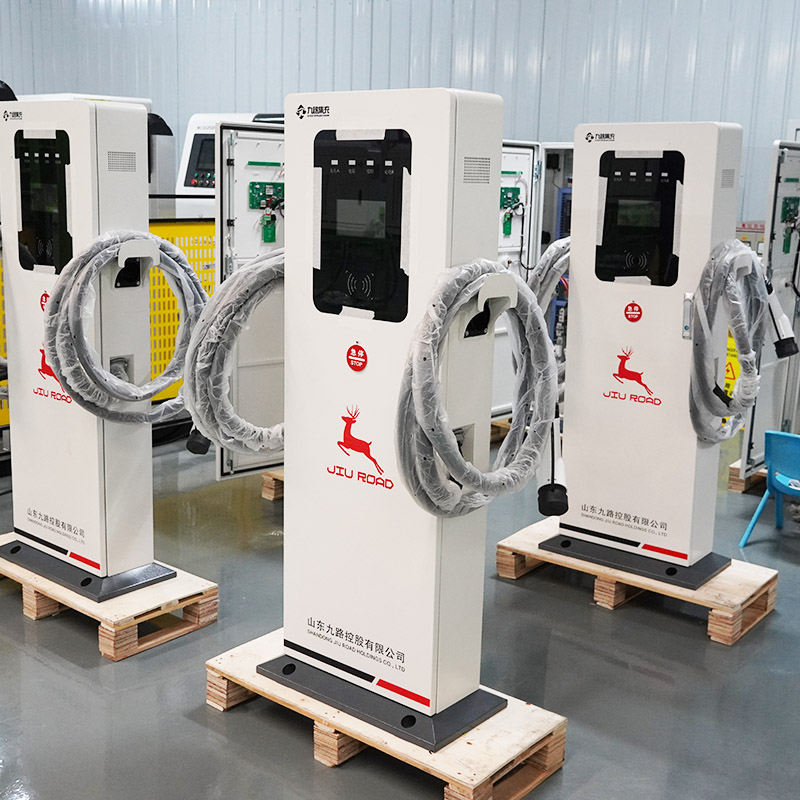
Rapid deployment strategies pivot entirely toward speed and volume. The primary business objective shifts to maximizing vehicle throughput. Fleet turnaround times become critical performance indicators. You focus heavily on the direct monetization of every single charging session. High turnover enables substantial revenue generation in short timeframes.
This hardware serves environments where drivers cannot wait. Users demand quick, seamless experiences similar to traditional gas stations. They expect to add hundreds of miles of range within twenty to thirty minutes. You must install these systems in highly visible, high-traffic corridors to ensure utilization.
Optimal use cases for rapid architecture include highway rest corridors and busy retail centers. Public charging hubs in dense urban areas rely heavily on these units. Heavy-duty fleet depots, particularly those running continuous shifts, find this hardware mandatory. A delivery van cannot sit idle for eight hours during a mid-day route.
The hardware categories within this tier offer varying capabilities. Standard direct current units typically deliver between 50kW and 150kW. These stations serve perfectly for retail environments where drivers dwell for one to two hours. They provide a meaningful charge while users shop or dine.
For high-demand environments, advanced architectures change the operational paradigm. A modern Full-Flex DC Charger system provides unparalleled efficiency. These sophisticated setups dynamically route power modules between multiple dispensers. They monitor real-time vehicle demand across the entire site. If one vehicle nears a full battery, the system senses the reduced intake capacity. It instantly redirects excess power to a newly arrived vehicle with an empty battery. This optimizes a massive 300kW grid connection across several stalls simultaneously.
Implementation realities for rapid stations present substantial hurdles. They require robust 480V 3-phase power connections. Sites often need dedicated step-up transformers and extensive trenching. You must coordinate closely with utility providers months in advance. The sheer electrical draw fundamentally alters the facility's energy footprint.
Selecting the appropriate infrastructure requires evaluating both initial setup demands and long-term operational impacts. You cannot judge a station solely on its hardware specifications. You must analyze the holistic resource footprint required to keep it functioning optimally.
Initial infrastructure demands vary wildly between the two technologies. Slower stations require a fraction of the physical resources. Installers can often run standard conduit from existing electrical rooms directly to the pedestals. Rapid stations demand an entirely different scale of site preparation. They necessitate deep trenching, heavy-duty concrete pads, and massive switchgear installations. Utility interconnection processes for rapid stations involve complex engineering reviews. You must account for lengthy permitting timelines and substantial site disruption during construction.
Ongoing operational requirements introduce hidden complexities. The most significant factor involves utility demand charges. Rapid stations draw immense amounts of power in short bursts. This frequently triggers costly utility peak demand penalties. These fees can drastically undermine the profitability of a site if utilization remains low. Slower stations draw consistent, lower-level power, largely avoiding these punitive utility tariffs.
Maintenance schedules also diverge significantly. Rapid units house complex inverters and active liquid-cooling systems. These components require regular filter replacements, coolant top-offs, and specialized technician visits. Slower stations feature very few moving parts. They typically require only basic visual inspections and periodic software updates.
Successful deployment requires strict utilization modeling. You must map your expected vehicle traffic against local electricity consumption thresholds. Determine the specific utilization rate required to break even on utility demands. Rapid stations require steady, continuous traffic to justify their massive power draw. If your site only hosts a few vehicles daily, slower hardware provides a far more stable operational foundation.
Evaluation Metric | Standard (Level 2) Infrastructure | Rapid (DCFC) Infrastructure |
|---|---|---|
Grid Requirements | Standard 208V/240V circuits | 480V 3-Phase power required |
Utility Impact | Low risk of demand charges | High risk of peak demand tariffs |
Site Preparation | Minimal conduit, standard wiring | Extensive trenching, large transformers |
Maintenance Needs | Low (Software, cable inspection) | High (Cooling loops, inverter filters) |
Developing a robust procurement strategy prevents premature hardware obsolescence. You must build a scalable roadmap that grows alongside vehicle adoption rates. Blindly purchasing equipment without an overarching site plan leads to fragmented, unmanageable networks.
You must begin with a comprehensive baseline grid capacity audit. Engage an electrical engineer to audit your existing panel capacity before evaluating any hardware. You need to know exactly how much spare amperage your facility currently holds. Determine if dynamic load balancing software can adequately delay costly utility upgrades. Software-based power sharing often allows you to install double the amount of slower stations on an existing panel.
Future-proofing demands flexible hardware choices. You should actively adopt a Modular EV charger approach for high-power deployments. Look for systems utilizing internal power blocks. For example, a cabinet might hold several 25kW modules. You can start with 50kW of output today. As larger fleet batteries arrive next year, you simply slide additional 25kW blocks into the same cabinet. This prevents you from ripping and replacing entire stations.
Interoperability remains non-negotiable for commercial networks. You must require strict Open Charge Point Protocol compliance. Mandate OCPP 1.6J or the newer 2.0.1 standard in your vendor contracts. This ensures your hardware can communicate with any backend software platform. It actively prevents vendor lock-in. If your software provider raises their subscription fees, compliant hardware allows you to migrate to a competitor effortlessly.
Finally, implement a mix-and-match deployment strategy. Few sites require a monolithic approach. Many successful deployments utilize a hybrid model based on actual user behavior. Consider installing 80% slower pedestals for employees or long-term visitors. Reserve the remaining 20% of your power budget for rapid stations dedicated to urgent turnover or fleet vehicles. This blended approach optimizes both grid capacity and user satisfaction.
The choice between slower pedestals and rapid power cabinets is rarely absolute. It is not about determining which technology is inherently superior. Instead, successful procurement aligns hardware capabilities with your site's natural dwell time, grid capacity, and operational model. A balanced approach ensures reliable service without overextending your electrical infrastructure.
Conduct a Thorough Power Audit: Hire an electrician to document your exact available amperage before contacting vendors.
Model Your Dwell Times: Survey your parking facility to determine if average visitors stay for forty minutes or four hours.
Request Comprehensive Estimates: Ask vendors to provide resource estimates that explicitly separate hardware from site preparation and utility interconnection demands.
Prioritize Modular Hardware: Select equipment that allows incremental power upgrades via internal modules rather than full replacements.
A: Most modern electric vehicles easily support both charging methods. They utilize dual-purpose plug standards like CCS or NACS. However, plug-in hybrid electric vehicles (PHEVs) typically only accept alternating current. They lack the specialized internal hardware required for rapid direct current intake. Always verify fleet vehicle compatibility before planning a site deployment.
A: Installation resources for rapid direct current systems far exceed slower setups. Implementing rapid stations typically requires an exponentially larger initial investment. Installation expenses often surpass the actual hardware value itself. This results from extensive trenching requirements, heavy-duty conduit needs, and potential utility transformer upgrades. Slower stations scale easily on standard electrical panels, keeping resource demands highly manageable.
A: Traditional rapid hardware dictates maximum peak power for every single plug. This behavior routinely triggers expensive utility demand penalties. A flexible architecture dynamically allocates power blocks across multiple active dispensers. It actively monitors real-time vehicle intake limits. You can effectively serve multiple vehicles from one optimized grid connection, preventing artificial power spikes and avoiding utility penalties.
A: Frequent rapid replenishment can theoretically accelerate thermal stress on battery cells over time. However, modern battery management systems significantly mitigate these risks. They actively monitor internal cell temperatures and throttle intake speeds accordingly. Liquid-cooled cables further stabilize the session. For optimal longevity, operators should utilize slower replenishment for daily charging and reserve rapid sessions for urgent turnaround needs.


