
Please Choose Your Language


Views: 0 Author: Site Editor Publish Time: 2026-06-18 Origin: Site


Installing an EV charging station requires balancing upfront capital expenditure against long-term revenue potential and user satisfaction. The choice between alternating current and direct current infrastructure dictates your site’s electrical requirements. It also impacts permitting complexity and defines your ideal target audience. Choosing the wrong equipment can lead to stranded assets or frustrated drivers.
Selecting the right hardware means moving past theoretical maximum charging speeds. You must evaluate actual user dwell times, grid constraints, and functional operational models. A highly utilized slow charger often outperforms a frequently idle fast charger. We will explore how to align technical capabilities with physical site limits to maximize asset utilization. You will learn actionable strategies to select the perfect infrastructure for your unique commercial space.
Dwell Time Dictates Technology: Match the charger to how long customers naturally stay at your location (hours vs. minutes).
Grid Capacity is the Bottleneck: DC fast charging requires significant electrical infrastructure upgrades; AC is highly scalable on standard commercial grids.
Upfront and Ongoing Costs: An EV dc charging station incurs higher upfront and maintenance costs but supports premium pricing and high vehicle turnover.
Hybrid Approaches Work: Many commercial sites benefit from a mix of AC and DC hardware to serve varied use cases.
Deploying infrastructure without a clear strategy leads to poor return on investment. You must first define what success looks like for your specific property. A Commercial EV charging station serves different purposes depending on the core business it supports.
Determine whether your hardware serves as an amenity or a direct profit center. Hotels and corporate campuses often treat chargers as amenities. They install them to attract high-value tenants or increase employee retention. Revenue from the chargers themselves remains secondary. In contrast, highway rest stops and dedicated charging hubs operate as profit centers. They rely on high transaction volumes and fast turnover to generate direct revenue.
Dwell time represents the natural duration a driver spends at your location. Matching hardware capabilities to this metric is your most critical design decision.
Short Dwell (15–45 mins): Locations like convenience stores, highway rest stops, and quick-service retail demand rapid turnover. Drivers expect to plug in, grab a coffee, and leave. This scenario strictly requires high-speed DC infrastructure.
Long Dwell (4–8+ hours): Workplaces, hotels, multifamily residential complexes, and overnight fleet depots naturally host vehicles for extended periods. Drivers do not need a rapid fill-up. This environment is ideal for standard AC equipment.
Avoid evaluating success purely based on raw charging speed. A faster charger does not guarantee a better user experience if drivers plan to park all day. Instead, track utilization rates. Monitor the cost per kilowatt-hour delivered. Assess the impact on your core business foot traffic. High foot traffic resulting from well-placed chargers often outweighs the direct electricity revenue.
Understanding the fundamental technical differences prevents costly over-engineering. The distinction lies in where the power conversion takes place.
Batteries store energy as direct current. The electrical grid delivers alternating current. An EV ac charging station supplies grid power directly to the vehicle. The vehicle uses an internal component called the Onboard Charger (OBC) to convert this alternating current into direct current. Because OBCs must be small and lightweight to fit inside the car, they have strict capacity limits. The vehicle ultimately dictates the maximum charging speed, typically capping between 7kW and 22kW. Upgrading your external hardware will not charge the car faster if the OBC acts as the bottleneck.
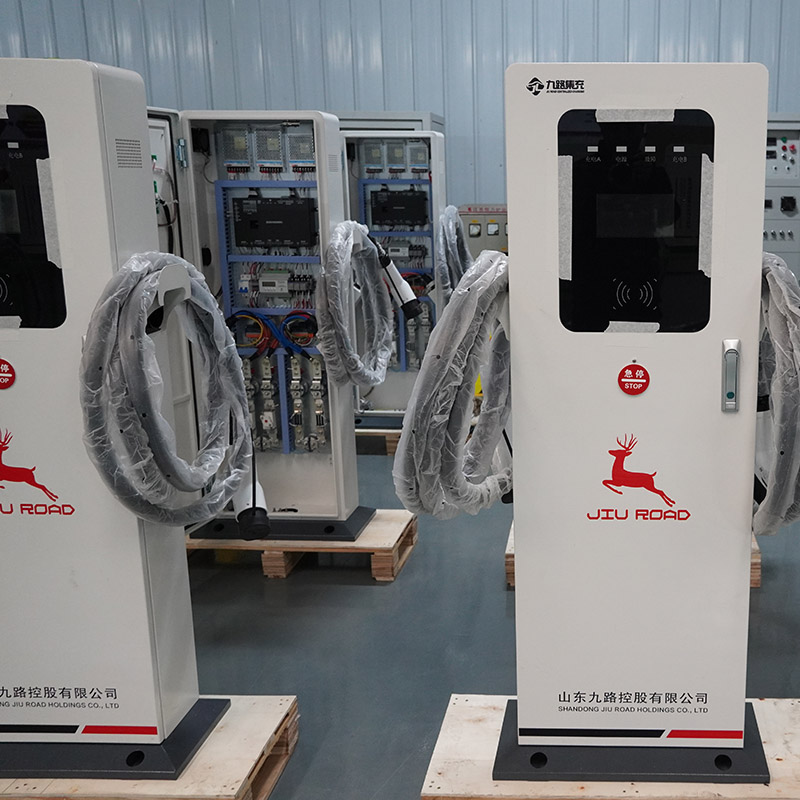
An EV dc charging station operates differently. It houses large, heavy power converters inside the external cabinet. This allows the station to convert alternating current from the grid into direct current internally. The station then feeds this direct current straight to the vehicle battery, bypassing the OBC entirely. This circumvention allows for extremely high-speed power delivery, ranging from 50kW to 350kW and beyond.
These architectural differences drastically affect physical footprint. AC units remain compact. You can easily mount them on walls or sleek pedestals. They integrate quietly into standard parking layouts. Conversely, high-power DC systems require substantial space. They often involve large dispenser units paired with massive external power cabinets. You must account for this heavy footprint during site planning.
Feature | AC Charging Infrastructure | DC Fast Charging Infrastructure |
|---|---|---|
Conversion Location | Inside the vehicle (OBC) | Inside the external charger cabinet |
Typical Power Output | 7kW to 22kW | 50kW to 350kW+ |
Physical Footprint | Compact, wall-mountable | Large, requires multi-cabinet layouts |
Ideal Dwell Time | 4+ hours | 15 to 45 minutes |
Financial viability relies on understanding both visible and hidden expenses. A simple comparison of hardware price tags often leads to poor long-term planning.
Capital expenditure varies drastically between technologies. AC units represent a highly accessible entry point. Their baseline hardware costs remain modest. DC units demand a substantially larger baseline investment per port. However, hardware represents just one part of the equation. You must factor in hidden installation costs. Trenching through asphalt, laying heavy conduit, and securing specialized labor quickly multiply your initial estimates. DC installations require thicker cables and extensive groundworks, escalating installation budgets significantly.
Many site hosts underestimate utility demand charges. Commercial electricity bills often include fees based on your peak power draw during a billing cycle. DC chargers pull massive amounts of power in short bursts. A single fast-charging session can trigger costly peak-load tariffs. These utility penalties can easily destroy your return on investment if overall utilization remains low. Careful energy management and battery storage integration help mitigate these spikes.
You must decide how to bill your users. Common models include billing per kilowatt-hour consumed or per minute connected. Drivers generally accept premium pricing for DC speed because they value the time saved. AC charging usually commands lower rates. Idle fees present another revenue stream. You can charge users an extra fee per minute if they leave their vehicle plugged in after the battery reaches full capacity. This encourages turnover and keeps hardware accessible.
Hardware is useless without reliable software. Ensure your evaluation includes Open Charge Point Protocol (OCPP) compliance. OCPP is the industry standard for interoperability. It ensures your hardware can communicate with different management networks. Adopting OCPP standards prevents vendor lock-in. You retain the freedom to switch software providers if you find better rates or superior features later.
Physical and regulatory realities often force compromises. Identifying these bottlenecks early prevents costly delays.
Most existing commercial properties lack spare electrical capacity. Standard retail spaces rarely have the power reserves necessary to support multiple fast chargers. Adding significant DC infrastructure usually requires utility grid upgrades. You may need to install new transformers or run high-voltage lines. These utility upgrades carry steep costs and demand careful coordination with your local power provider.
Bureaucracy moves slowly. Installing robust infrastructure triggers complex permitting cycles. Environmental reviews, zoning board approvals, and utility inspections add months to your timeline. AC deployments usually pass through these hurdles quickly because they pull standard power levels. DC installations face strict scrutiny. You should plan for utility delays that can easily stretch deployment schedules past a year.
Site planning goes far beyond drawing a box in a parking lot. You must account for specific turning radiuses and cabinet spacing. Accessibility remains a strict legal requirement. The Americans with Disabilities Act (ADA) mandates accessible parking spaces. You must design wider parking bays, install accessible touchscreens, and ensure cables do not obstruct wheelchair paths. Proper bollard placement protects expensive cabinets from driver collisions without blocking access.
When permanent infrastructure faces massive delays, flexible alternatives provide immediate relief. A Portable EV charging station serves as an excellent stopgap solution. You can deploy these units rapidly for events, seasonal fleets, or sites awaiting permanent utility upgrades. They bypass complex trenching requirements. While they do not replace permanent setups, they allow you to offer services immediately while you navigate long-term permitting.
We can simplify the decision by examining three common operational scenarios. Use these profiles to align your hardware choices with your core business logic.
Hotels, corporate offices, and residential buildings host vehicles for long periods. Speed is not the priority here. Accessibility and scale matter most.
Recommendation: Deploy a high volume of networked AC chargers.
Rationale: This approach keeps capital expenditure low. It allows you to distribute available power across multiple vehicles using smart load balancing. It perfectly matches the natural eight-hour dwell time of employees or overnight guests.
Malls, grocery stores, and entertainment districts see varied visitor patterns. Some shoppers browse for hours. Others grab items quickly. You need flexibility to serve both demographics.
Recommendation: Implement a mixed-use strategy featuring Level 2 AC units and moderate 50kW–150kW DC fast chargers.
Rationale: A mixed approach captures "top-up" shoppers looking for a slow charge while they watch a movie. It also captures high-turnover drivers needing a fast turnaround while they buy groceries. This maximizes foot traffic diversity.
Commercial delivery fleets and highway transit hubs operate under strict time constraints. Every minute a vehicle sits idle represents lost revenue.
Recommendation: Invest heavily in ultra-fast DC charging infrastructure.
Rationale: This setup maximizes vehicle uptime. It is absolutely essential for high-mileage turnover. While the capital investment is substantial, the rapid turnaround directly supports the core operational revenue.
The right infrastructure choice rarely means simply buying the fastest equipment available. It means selecting the hardware that perfectly aligns technical capabilities with your site's physical constraints and customer behavior. Rushing into a high-power installation without evaluating utility limits often results in severe financial penalties and delayed rollouts.
Take time to map your expected dwell times and review your existing electrical capacity. We highly recommend initiating a formal site energy audit as your next step. Consult with a specialized Engineering, Procurement, and Construction contractor before committing to any hardware purchases. They will identify hidden grid constraints early, ensuring your final deployment remains profitable, scalable, and perfectly matched to your audience.
A: Upgrading is rarely a simple swap. The wiring, conduit sizes, and fundamental power requirements differ drastically between the two technologies. Moving to fast charging usually requires a near-complete rebuild of the underground infrastructure and significant utility transformer upgrades.
A: They are best utilized for temporary needs, emergency fleet backup, or unpermitted lots. While excellent as stopgap measures, they generally lack the deep software integration, automated billing management, and rugged durability expected of permanent commercial setups.
A: Utility companies charge commercial sites based on peak power draw. Fast chargers consume massive amounts of power in short bursts. These spikes trigger expensive peak demand tariffs. If charger utilization remains low, these electricity fees can severely outweigh the revenue generated from drivers.


