
Please Choose Your Language


Views: 0 Author: Site Editor Publish Time: 2026-06-15 Origin: Site


Plugging in a vehicle seems like a straightforward concept on the surface. Yet, deploying charging infrastructure at scale requires a deep understanding of complex power conversion and stringent grid constraints. Many organizations struggle to bridge the gap between technical curiosity and practical procurement. Misunderstanding how power is delivered, shared, and managed often leads to over-specified hardware, stranded electrical assets, or unnecessarily inflated capital expenditures. You cannot simply buy the fastest station and expect optimal results.
This guide deconstructs the precise technical mechanics behind an EV charger. We will provide a rigorous, vendor-neutral framework for evaluating commercial charging infrastructure. You will learn how to align hardware capabilities with real-world energy demands, ensuring resilient and scalable deployments. By treating these stations as intelligent edge devices rather than basic plugs, facility operators can effectively mitigate implementation risks.
An EV charger (technically an EVSE) does not inherently charge the battery; it safely delivers AC or DC power to the vehicle’s internal management systems.
Selecting the right hardware requires aligning vehicle dwell times with power output (kW) to avoid over-investing in unnecessary charging speeds.
Modern procurement is shifting toward a Modular EV charger architecture and dynamic power sharing to future-proof sites and minimize grid upgrade costs.
Most people misunderstand the fundamental role of charging equipment. They assume the station itself actively pushes energy into the battery cells. In reality, the physical device you interact with operates merely as a highly intelligent safety valve.
We must first clarify a critical technical distinction. The external station is formally known as Electric Vehicle Supply Equipment (EVSE). It functions as a smart electrical conduit. It does not actively regulate battery cell voltage. The actual "charger" for standard alternating current power lives inside the car. This internal component is the Onboard Charger (OBC). The EVSE communicates with the OBC, confirming parameters before opening the electrical contactors.
Vehicle batteries only store Direct Current (DC). They cannot utilize Alternating Current (AC) directly from the electrical grid. Level 2 stations simply pass AC grid power directly to the vehicle. The internal OBC then rectifies this AC power into DC power for storage.
Conversely, DC Fast Chargers handle this heavy conversion externally. They house massive internal rectifiers. They bypass the vehicle's OBC entirely. This allows them to deliver DC power straight to the battery pack, enabling exceptionally rapid power delivery.
Electrons do not flow the moment you connect a cable. A sophisticated digital handshake must occur first. Modern stations rely on communication protocols like ISO 15118 to negotiate this connection safely.
Cable Verification: The station checks connection integrity to ensure no exposed pins.
Fault Detection: Systems actively monitor for ground faults or insulation failures.
Parameter Negotiation: The station asks the vehicle for its maximum acceptable current.
State of Charge (SoC) Monitoring: Continuous telemetry prevents overcharging and thermal events.
Selecting infrastructure requires evaluating how long vehicles actually remain parked. U.S. DOT and EPA benchmarks provide standardized kW ranges. We must anchor procurement strategies to these realistic dwell times.
Level 2 stations form the reliable baseline for extensive dwell times. They typically operate between 7kW and 19kW. These units perfectly serve locations where cars park for four to eight hours. Workplaces, multi-family residential complexes, and overnight fleet depots fall into this category. The hardware remains cost-effective, and it minimizes severe spikes in localized grid demand.
DC Fast Charging handles rapid turnover requirements. Ranging from 50kW up to 350kW and beyond, these stations serve critical transit hubs. Highway corridors, heavy-duty fleet turnarounds, and public retail centers demand this velocity. However, this speed requires massive utility infrastructure and complex thermal management.
Hardware configuration matters just as much as raw power output. You must evaluate the physical design against your intended application.
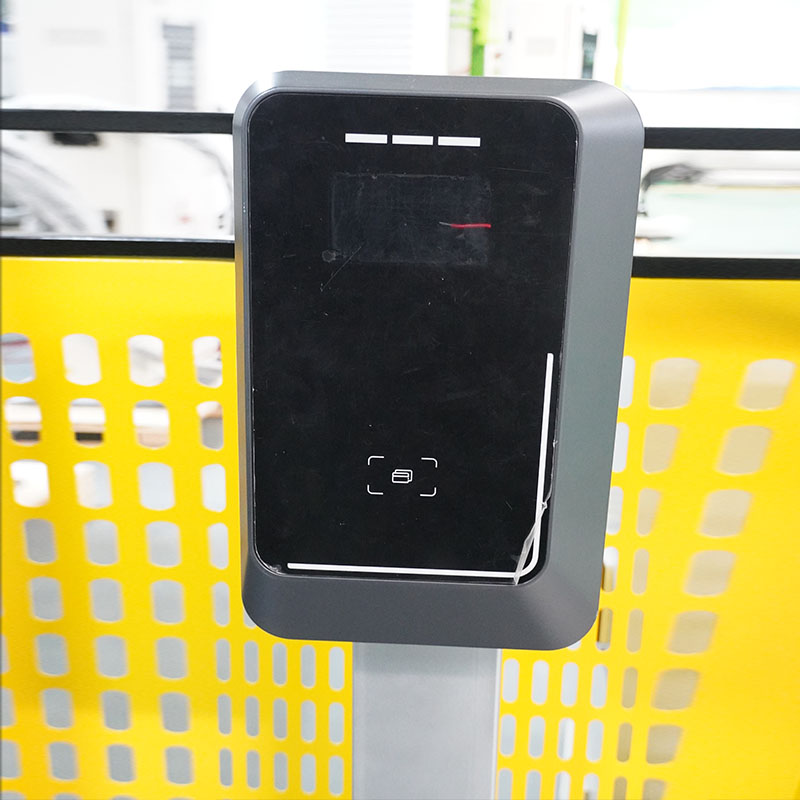
A permanent Commercial EV charger requires specific enterprise features. You must prioritize ruggedized enclosures built for harsh weather. Look for integrated payment terminals and networked load-balancing capabilities. These units manage energy distribution intelligently across multiple parking bays.
Conversely, a Portable EV charger solves distinct edge-case deployments. You might encounter temporary event sites, pilot fleet programs, or roadside emergency services. In these scenarios, permanent concrete trenching remains premature or physically impossible. Portable units provide immediate power access without permanent civil engineering commitments.
Feature | Level 2 AC Charging | DC Fast Charging |
|---|---|---|
Power Output | 7kW - 19kW | 50kW - 350kW+ |
Conversion Location | Inside the vehicle (OBC) | Inside the charging station |
Target Dwell Time | 4 - 8 Hours | 15 - 60 Minutes |
Primary Use Cases | Workplaces, Depots, Hotels | Highways, Retail, Rapid Transit |
Basic hardware definitions only take you so far. Enterprise deployments require sophisticated engineering topologies to scale profitably. Standalone chargers often fall short when facility demands grow.
Traditional hardware utilizes a 1:1 architecture. One power cabinet feeds one dispenser. This rigid setup severely limits scalability. Furthermore, it routinely strands available power. When a vehicle reaches an 80% State of Charge (SoC), its battery management system throttles the acceptance rate to protect cell chemistry. A 150kW station might only deliver 20kW during this phase. The remaining 130kW sits completely unused, stranding valuable electrical capacity.
Next-generation designs eliminate this inefficiency. A Modular EV charger architecture relies on stacking discrete power modules inside a central cabinet. You might use multiple 30kW or 40kW blocks. This configuration allows facility managers to increase total station capacity over time. You simply insert additional modules without replacing the entire concrete footprint. It also guarantees high redundancy. If one internal module fails, the station continues operating at a slightly reduced capacity rather than going entirely offline.
Taking modularity further introduces dynamic power allocation. A Full-Flex DC Charger acts as an intelligent energy matrix. It severs the rigid 1:1 relationship between power cabinet and dispenser.
The centralized power cabinet analyzes all connected vehicles simultaneously.
It reads real-time SoC data and maximum acceptance rates for each battery.
The matrix routes specific kW increments to different dispensers dynamically.
As one vehicle tapers its charge curve, the system instantly reallocates that freed power to a newer, emptier vehicle.
This maximizes utility constraints. You serve more vehicles daily using the exact same grid connection limit.
Procuring charging hardware requires strict alignment between operational outcomes and technical specifications. Buying the highest specification unit rarely yields the best operational results.
You must rigorously align hardware capabilities with real-world usage. Do not buy a 150kW charger if your fleet sits parked for 12 hours overnight. Frame your utilization calculations around actual dwell times. A larger quantity of lower-powered Level 2 stations often services a depot better than two massive DC fast chargers. Measure success by vehicle readiness, not peak hardware speed.
Software dictates operational flexibility. You must stress the absolute necessity of Open Charge Point Protocol (OCPP) compliance. This standard allows the hardware to communicate with third-party software platforms. Buyers must retain the ability to swap backend software providers in the future. If a vendor requires proprietary networks, you risk total asset obsolescence should that vendor alter their service terms.
Implementation realities quickly shatter poorly planned budgets. Buyers often discover the physical charging unit represents only a fraction of the total project cost.
Cost Category | Estimated Percentage | Description |
|---|---|---|
Make-Ready Infrastructure | 40% - 50% | Trenching, conduit, concrete pads, and site restoration. |
Electrical Upgrades | 20% - 30% | Utility transformers, new switchgear, and higher amperage panels. |
Hardware (EVSE) | 20% - 30% | The physical charging stations and power cabinets. |
Software & Permitting | 5% - 10% | OCPP network setup, local municipal permits, and inspection fees. |
Evaluate sites based on existing utility transformer limits and necessary trenching lengths. Minimizing civil engineering drastically improves deployment viability.
Even the most rigorous hardware evaluation cannot prevent external rollout delays. Real-world deployments face severe logistical and economic hurdles. Approaching these projects with an evidence-oriented mindset builds resilience.
We must warn operators about utility interconnect timelines. Securing necessary grid upgrades requires immense patience. Depending on the local utility jurisdiction, obtaining a new transformer can take anywhere from 12 to 18 months. You must engage the utility company during the initial site design phase, long before issuing hardware purchase orders.
Operational economics depend heavily on smart energy management. Deploying high-powered DC fast chargers without careful planning often triggers punitive utility demand charges. Utilities bill commercial sites based on their highest single spike in power usage during a billing cycle. Unmanaged fast charging can easily double a facility's monthly electricity bill. To mitigate this risk, operators deploy smart load management software or integrate Battery Energy Storage Systems (BESS) to shave peak grid demand.
You must look beyond glossy manufacturer specification sheets. The industry struggles notoriously with broken stations. Evaluate vendors based on strict Service Level Agreements (SLAs).
Best Practices:
Require a minimum 97% verifiable uptime guarantee in your contracts.
Ensure the hardware supports extensive remote diagnostic capabilities to resolve software glitches without rolling a truck.
Verify the availability of local, certified Operations & Maintenance (O&M) technicians.
Common Mistakes:
Failing to secure preventative maintenance contracts post-installation.
Ignoring cellular signal strength at the installation site, which causes payment and network failures.
An EV charger functions as a complex edge-computing device managing high-voltage power. It is far more sophisticated than a simple electrical plug. Deploying these systems effectively requires aligning technical topologies with specific operational constraints.
Never over-specify hardware speeds; match kilowatt output directly to actual vehicle dwell times.
Prioritize modular and dynamic power-sharing architectures to scale efficiently and avoid stranded energy.
Always demand OCPP compliance to prevent proprietary software lock-in.
Engage utility providers immediately, as grid interconnect timelines often dictate project viability.
We strongly advise decision-makers to execute a comprehensive site energy audit and fleet dwell-time analysis before releasing any hardware RFPs. Contact a qualified solutions architect today to thoroughly scope your specific infrastructure needs.
A: The equipment installed in the parking lot is the EVSE (Electric Vehicle Supply Equipment). It acts as a smart safety conduit to deliver power. The actual AC-to-DC "charger" is built directly into the car. The exception is DC Fast Charging, where the conversion charger resides externally inside the station itself.
A: Yes, you can mix hardware brands easily. However, you must ensure all hardware is fully OCPP-compliant. This standard guarantees you can manage every unit under a single, vendor-agnostic Charge Point Management System (CPMS), unifying your data dashboard.
A: Frequent, exclusive use of high-kW DC charging can impact battery health over several years. Heat generated during rapid charging stresses cell chemistry. However, modern vehicle thermal management systems actively cool the battery during these sessions, which heavily mitigates severe long-term degradation.
A: You should select a modular design when you anticipate phased expansion or when system uptime remains mission-critical. Modular systems allow you to add capacity block by block. Furthermore, their parallel power modules offer high fault tolerance; if one module drops, the rest continue charging.


