


Views: 0 Author: Site Editor Publish Time: 2026-08-24 Origin: Site


As electric vehicles multiply on our roads, businesses and homeowners face a difficult practical challenge. You must power more cars using limited physical space. A dual-port station offers a compelling technical solution. This specific equipment acts as a single charging station equipped to handle two vehicles simultaneously. It utilizes two separate cables connected to one centralized hardware housing.
Transitioning to reliable electric vehicle infrastructure requires careful planning and foresight. Decision-makers must balance initial hardware investments against strict electrical capacity limits. You also need to prioritize everyday user convenience to ensure smooth adoption. A misstep in hardware selection often leads to expensive electrical retrofits later.
This article gives you a robust technical and financial evaluation framework. We explore the underlying engineering realities behind shared charging systems. You will learn how to accurately assess site limitations and installation workflows. Ultimately, this guide helps you decide if a dual-port system represents the smartest investment over installing two entirely separate single-port stations.
Infrastructure Efficiency: A dual connector EV charger reduces the need for multiple conduit runs and dedicated mounting spaces, cutting installation labor costs.
Power Management: Most models utilize dynamic load balancing, splitting available amperage (e.g., a 22kW EV charger delivering 11kW per port when two vehicles are plugged in).
Panel Capacity Reality: While saving physical space, dual chargers still require sufficient electrical panel capacity; they do not magically generate more power from the grid.
Commercial vs. Residential Value: Ideal for commercial fleets, multi-tenant properties, and multi-EV households prioritizing future-proofing and smart software integration.
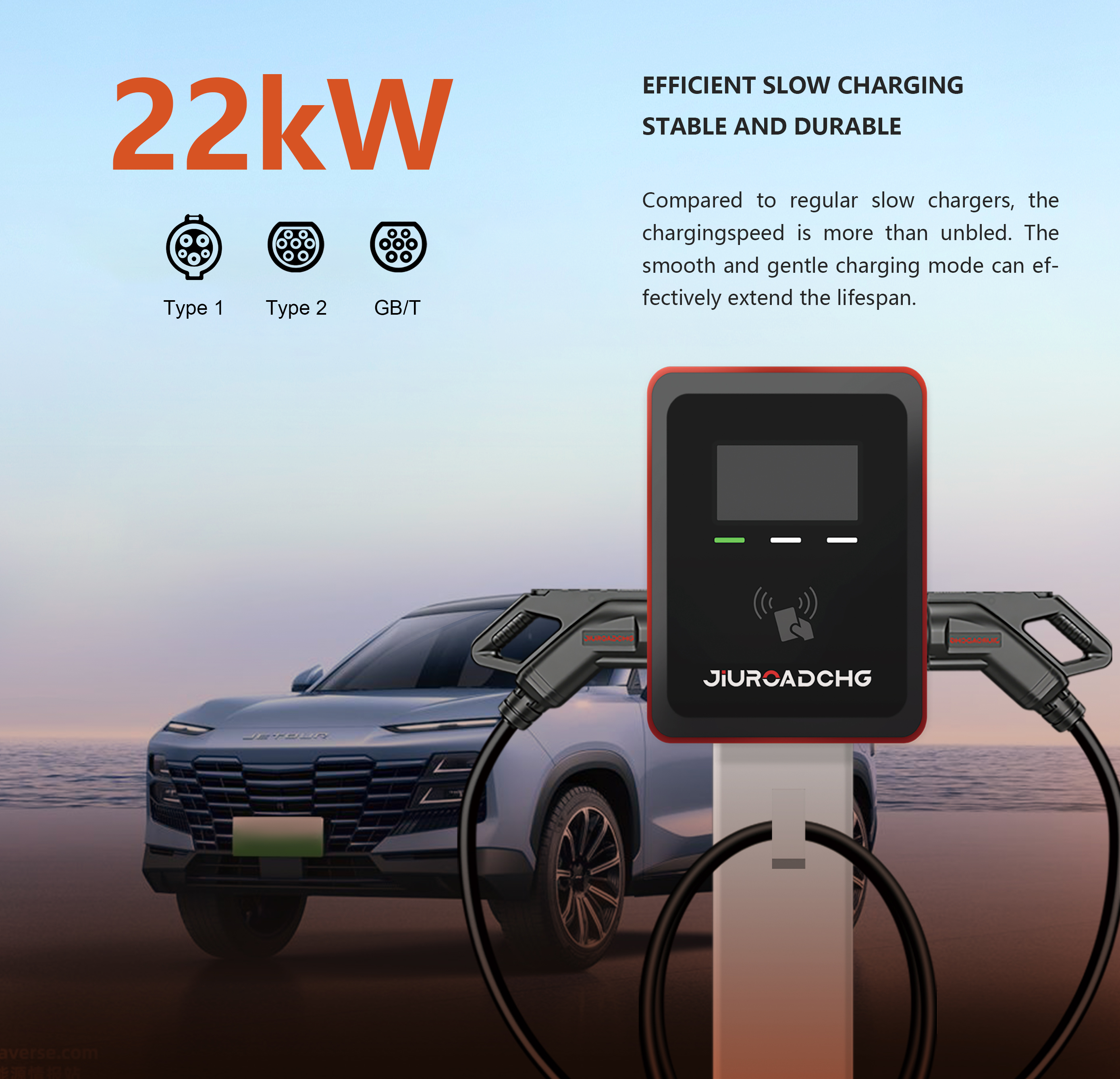
Understanding the internal engineering helps buyers make informed decisions. The core mechanism relies on safely managing high-voltage electricity through a consolidated footprint. The unit draws alternating current (AC) directly from your main electrical service line. It routes this energy into a single hardware enclosure. Internal contactors and relays then distribute the current safely to two independent output cables. The vehicles’ onboard inverters subsequently convert this alternating current into direct current to fill their battery packs.
Power splitting mechanisms form the brain of these systems. Manufacturers implement two primary methods for managing the electrical load across both cables. You must recognize the difference between them to avoid performance bottlenecks.
Static Load Management: The system rigidly divides the total available power in half. If the main circuit provides 40 amps, each port receives exactly 20 amps. It never adjusts this ratio, even if one car reaches a full charge early.
Dynamic Load Management: This intelligent approach actively monitors power draw. The internal software continuously communicates with both vehicles. If one vehicle finishes charging, the system automatically shifts all available amperage to the remaining vehicle. This maximizes overall charging speeds.
The underlying math directly impacts driver expectations. Consider a standard 22kW EV charger connected to a robust commercial three-phase supply. When a single vehicle connects, it can potentially draw the full 22kW. However, once a second vehicle plugs in, the unit splits the load dynamically. Output drops to 11kW per port. The equipment ensures you never trip the main breaker while keeping both cars topped up.
Connector standardization plays a crucial role in hardware selection. European and Asian markets largely standardize around the Type 2 plug for alternating current systems. North American markets predominantly rely on the J1772 standard. Many premium dual-port units offer mixed cable configurations straight from the factory. This flexibility allows facility managers to serve different vehicle models without relying on clumsy aftermarket adapters.
Hardware selection depends entirely on your specific site constraints. Certain environments benefit massively from consolidated power systems.
Commercial parking lots and workplace garages represent the most common deployment scenario. Real estate costs money. Surface lots often lack extra space for wide equipment pedestals. Furthermore, installing electrical conduit across an existing parking lot requires expensive trenching. Tearing up asphalt destroys facility budgets quickly. Choosing a single pedestal equipped to charge two cars maximizes your charging density. You double your service capacity per parking space. You successfully avoid cutting new trenches for separate electrical lines.
Multi-Unit Dwellings (MUDs) face highly unique electrical hurdles. Property managers must serve multiple tenants fairly and equitably. Apartment buildings usually possess limited primary electrical service. You simply cannot add a dedicated 50-amp circuit for every single resident owning an electric car. Dual-port units provide highly equitable access. They allow two tenants to share a single high-capacity circuit safely. Residents can rotate parking spots easily without overwhelming the building’s primary transformer.
Multi-EV households represent a rapidly growing residential demographic. Two-car garages increasingly house two fully electric vehicles. Upgrading a standard home electrical panel to accommodate two massive dedicated circuits is incredibly expensive. Sometimes structural limitations make panel upgrades physically impossible. A dual connector EV charger solves this residential bottleneck perfectly. Homeowners utilize one robust circuit to charge both family cars overnight without requiring complex electrical retrofits.
Buyers often struggle to untangle marketing promises from actual installation facts. You need a clear view of the financial realities before finalizing a purchase order.
The upfront hardware cost immediately stands out during procurement. Purchasing one dual-port station costs noticeably more than buying a single-port model. The housing contains extra relays, an additional heavy-duty cable, and more sophisticated internal software boards. However, the unit generally costs much less than purchasing two entirely independent charging stations.
Installation savings represent your true financial return on investment. Electricians charge heavily for their time and labor. When installing a consolidated system, technicians pull one higher-gauge wire bundle. They install one conduit path along the wall or underground. They mount one physical hardware enclosure. This workflow reduces electrician labor drastically. Material costs for copper wiring and metal conduit plummet compared to trenching and wiring two distinct stations at opposite ends of a lot.
You must carefully navigate the electrical panel bottleneck. Facility managers and homeowners often hold a major misconception regarding dual units. They incorrectly assume these stations magically generate extra power. This is completely false. A shared EV AC charger still demands a highly robust circuit breaker. Most commercial dual units require a dedicated 40A to 80A breaker to function correctly.
If your site’s electrical panel is already fully maxed out by HVAC systems and heavy machinery, you face a problem. You must complete a heavy service upgrade from the local utility company. Alternatively, you must deploy advanced dynamic load management software. This specialized software restricts the total station draw to match your existing panel limits, stepping down vehicle power during peak building usage hours.
Evaluation Metric |
Dual-Port Station |
Two Single-Port Stations |
|---|---|---|
Upfront Hardware Cost |
Moderate to High |
High (Cost of two units) |
Installation Labor |
Low (One wiring run) |
High (Two separate runs) |
Space Required |
Minimal (One pedestal) |
Maximum (Two pedestals) |
Electrical Panel Capacity |
Requires one large breaker |
Requires two separate breakers |
Not all charging systems offer the same baseline functionality. Evaluating specifications strictly against your daily operational needs prevents expensive buyer’s remorse.
Networked versus non-networked capabilities form the biggest dividing line. Commercial environments absolutely require software control. Look for strict OCPP (Open Charge Point Protocol) compliance. This industry standard ensures your hardware communicates seamlessly across different software platforms. You completely avoid vendor lock-in if you decide to change management software later. Billing software integration allows property owners to generate revenue seamlessly. User authentication via RFID cards or mobile smartphone apps ensures only authorized personnel access the equipment.
Dynamic load balancing requires careful hardware scrutiny. Seek systems offering native load-sharing capabilities built directly into the firmware. The charger must safely step down output power without dropping the vehicle connection. It should react instantly to real-time grid constraints. High-end commercial units monitor surrounding building loads continuously, lowering vehicle charging speeds when the building's air conditioning kicks on.
Durability dictates your equipment's actual lifespan. Outdoor installations face punishing weather conditions year-round. Demand NEMA 4 or IP65 enclosure ratings at a minimum. These specific ratings prove the equipment survives heavy rain, snow, and fine dust intrusion. Evaluate the cable management systems closely. Mechanical retractors prevent heavy cables from dragging on rough concrete. This prevents insulation wear and dangerous copper exposure.
Finally, consider the user interface carefully. LCD screens offer direct, intuitive feedback to drivers in poorly lit garages. However, pure app-based monitoring reduces vulnerable physical components on the machine's face, preventing vandalism damage.
Conduct a thorough site energy audit before purchasing any hardware.
Ensure your chosen software platform supports future hardware additions.
Install stations close to the main electrical panel to reduce copper wiring costs.
Ignoring local utility rebate programs requiring specific networked certifications.
Purchasing non-OCPP compliant hardware for commercial parking lots.
Neglecting to buy extended warranty plans covering cable wear and tear.
Navigating the regulatory landscape ensures your installation remains legal and safe. Proceeding without proper permits invites massive fines and potential fire hazards.
Local grid regulations govern how much power you can safely draw. Utility companies impose strict rules for high-amperage commercial installations. Commercial settings often face severe utility demand charges. These financial penalties occur when your facility experiences sudden, massive spikes in electricity usage. Plugging in a dozen fleet vehicles simultaneously triggers these spikes. You must implement scheduling software to stagger charging sessions and avoid crippling utility bills.
Safety certifications are strictly non-negotiable. Never purchase uncertified gray-market hardware. Insist heavily on UL, CE, or equivalent regional safety marks. Dual continuous loads generate incredibly significant heat inside the equipment housing. Moving 80 amps of power for ten hours straight stresses internal contactors deeply. Superior thermal monitoring inside the charger proves essential. Intelligent systems detect internal overheating immediately and throttle power down to prevent catastrophic electrical fires.
You must acknowledge future-proofing limitations honestly. An alternating current station handles current dwell-time needs perfectly. The technology works exceptionally well when fleet vehicles park overnight or employees park for entire workdays. However, highly utilized commercial delivery fleets may eventually outgrow this speed. They might ultimately require DC fast charging infrastructure for rapid, mid-shift turnarounds. Dual ports solve slow, sustained charging demands brilliantly, but they do not replace the need for highway-speed rapid charging.
Transitioning to shared electric vehicle infrastructure streamlines facility operations immensely. You successfully minimize upfront installation labor and reduce complex physical footprints. Decision-makers should prioritize dual-port hardware when ground space remains tight, trenching costs run excessively high, and vehicles typically park for four or more hours at a time. The technology delivers exceptional value by sharing robust electrical circuits efficiently.
Before purchasing equipment, you must take precise action. Hire a certified commercial electrician to conduct a formal site load calculation. Confirm your building's remaining panel capacity accurately. Compare smart, networked systems against your long-term software management goals to secure a scalable, future-proof charging network.
A: Usually no. If the equipment utilizes load sharing and receives a 22kW maximum feed, it splits the power dynamically. It typically delivers 11kW per vehicle when both charge simultaneously. Maximum speed occurs only when one vehicle charges alone, or if the station is uniquely wired using two entirely independent circuits.
A: It depends heavily on your current main service size and a formal electrical load calculation. Many homes lack the spare capacity. However, advanced models featuring dynamic load balancing software help avoid expensive upgrades. They actively limit total power draw based on your home’s real-time energy use.
A: On robust commercial-grade units, the cables connect via modular internal terminals. An electrician can easily unbolt and replace a single damaged cable independently. You do not need to replace the entire expensive charging station housing just because one connector broke.
A: Generally no. Networked chargers are essential for commercial environments to handle driver billing and complex fleet management. For residential homes, a basic "plug-and-play" unit or a simple Wi-Fi-enabled smart charger provides more than enough data tracking for personal utility analysis.


